Opera Wants Your Browser to Run the AI—Here's What It Actually Costs
Opera wants a web standard that runs AI inside your browser instead of a server. It sounds cheap and private, but the trade-offs are real and specific.
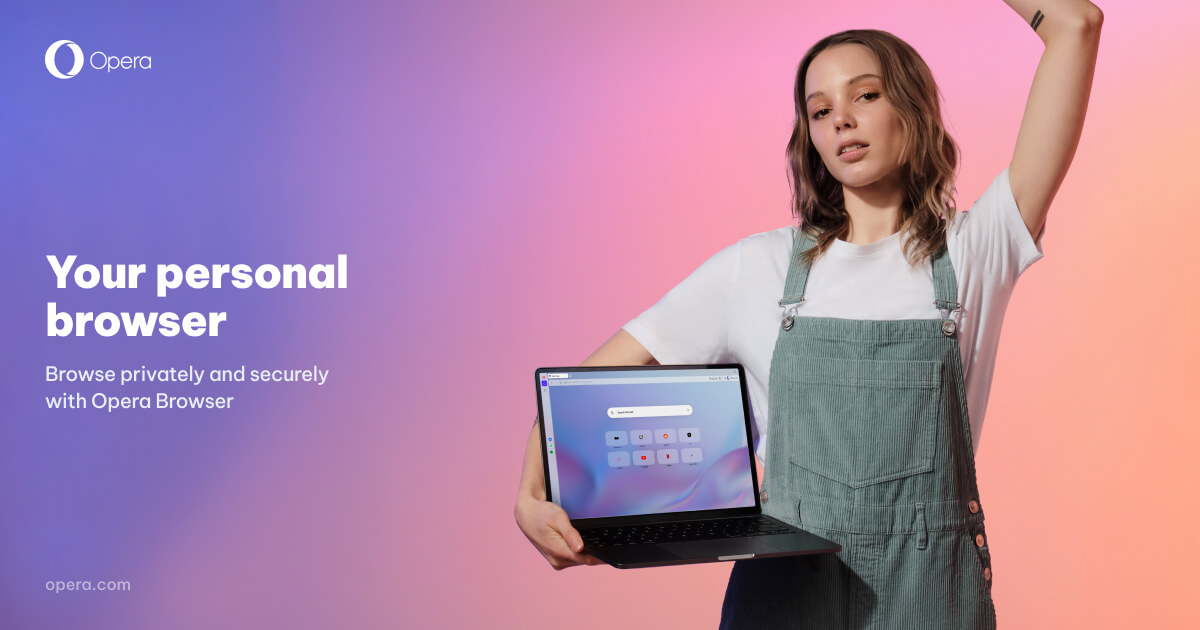
Opera dropped a new web standard on October 27, 2026, aimed at letting users deploy AI models locally inside the browser. TechCrunch reported the move, and it lands at a moment when browsers are quietly becoming the runtime for small models—not just the window to the cloud.
What Opera Actually Proposed
The headline is simple: a standard for local AI deployment in the browser. The details matter more. Opera is trying to define how a web page can hand a model to the browser, where it runs, and how the page talks to it—without shipping every token to a remote API.
That is a different problem than “run Llama in a tab.” WebAssembly and WebGPU already let you do that. The missing piece is a contract: a predictable interface so developers don’t rebuild the plumbing for every browser and every model.
Think about what a contract like that would have to cover. A page needs a way to declare which model it wants, in a form the browser can resolve without a bespoke loader for each vendor. It needs a lifecycle—load, warm, invoke, unload—so the browser can decide when memory is freed and when a background tab stops hogging the GPU. It needs a transport for inputs and outputs that doesn’t force every developer to hand-roll tokenization and streaming. And it needs a permission story, because a multi-gigabyte download is not something a browser should start silently when a user opens a page.
None of those pieces are exotic on their own. The novelty is bundling them into one surface that a standards body could ratify and multiple vendors could implement compatibly. Today the same job is done by a patchwork: WebAssembly for compute, WebGPU for acceleration, the Cache API and IndexedDB for storage, and a pile of JavaScript glue that every team writes slightly differently. A standard would collapse that glue into something the platform owns.
Why Browsers Are the New Local Runtime
This is not Opera alone. Chrome has been pushing WebGPU and built-in AI APIs. Firefox has been experimenting with local inference. The browser is the one runtime every user already has installed, already sandboxed, and already updated.
For builders, that changes the deployment math. A local model inside the browser means no server bill per token, no data leaving the device, and no separate app install. It also means you inherit the browser’s memory limits, its GPU access rules, and its update cadence.
Those inherited constraints deserve a closer look, because they cut both ways. On the cost side, the arithmetic is genuinely attractive: inference that runs on the user’s hardware has a marginal cost near zero, and it scales with the user base rather than against it. On the privacy side, prompts and documents that never leave the device are a compliance argument that writes itself—no data processing agreement for the inference path, no region-by-region data residency question for the tokens themselves. On the distribution side, a web app with a model attached needs no app store review and no installer, which is precisely the kind of friction that keeps small teams from shipping.
But the same properties that make the browser a good runtime make it a constrained one. Memory ceilings are set by the browser and the device, not by the developer. GPU access arrives through an abstraction layer that prioritizes safety and portability over raw throughput. And the update cadence belongs to the vendor: a behavior that works in one release can shift in the next, and the developer has no pin to hold it still. Anyone who has shipped on a platform they don’t control knows this trade. The browser offers reach in exchange for control, and local AI inherits that bargain exactly.
There is also a quieter reason browsers are winning this role. They are the only runtime where a model can be shared across applications without a shared process. A model cached by the browser can, in principle, serve any page that requests it, the way a font or a script is cached today. That turns model weights into a platform resource rather than an app asset—a shift with real consequences for download sizes, storage quotas, and the economics of shipping AI features to users on modest hardware.
The Hard Part Is Not the Model
The hard part is the standard. A local AI API has to answer questions that WebAssembly never had to: Which model? Whose weights? What happens when the device has 8GB of RAM and no discrete GPU? How do you cache a multi-gigabyte download without blowing the storage quota?
Each of those questions hides a policy decision. “Which model” is not just a name; it is a question of who curates the catalog and who pays for hosting the weights. “Whose weights” raises licensing: a standard that assumes open weights behaves differently from one that must accommodate gated or proprietary models. The low-memory device is a fallback problem—does the browser refuse to run, degrade to a smaller model, or fall back to a remote call, and who decides? And the storage question is really a question about eviction: a cached model that vanishes under quota pressure is a user-visible failure, so the standard has to say how the browser signals that a model is no longer resident.
Opera’s proposal is a first draft, not a finished spec. TechCrunch’s report frames it as an opening move. That is the right frame. Standards live or die on whether other vendors adopt them, and a browser-only standard from one vendor is a suggestion until Chrome and Safari sign on.
The counter-evidence is worth stating plainly. Browser vendors have a long history of shipping overlapping APIs that never converge, and “built-in AI” efforts have so far been vendor-specific rather than portable. A single vendor’s draft can also be overtaken by a competing proposal that arrives with more implementation weight behind it. And there is a real argument that the model layer is moving too fast for standardization to keep up—that by the time a spec is ratified, the interesting work has moved to a different kind of model or a different execution path. None of that dooms Opera’s effort, but it does mean the draft should be read as a bid for direction, not a guarantee of outcome.
What would count as progress? Other vendors implementing the same surface, even partially. A test suite that lets a developer check compatibility without reading three sets of documentation. And, eventually, a home in a standards body where the interface can be maintained rather than merely announced. Until then, the honest description is that Opera has named the problem clearly and proposed one answer to it.
What Builders Should Do Now
Don’t rewrite your stack today. Do watch the interface. If a local AI standard lands, the winners are the teams that already separated their model calls from their product logic—the ones who can swap a cloud endpoint for a browser-local call without touching the UI.
Start with the boring cases: classification, embedding, short summarization. Those are the workloads where a small local model beats a round trip to an API on latency and cost. Keep the frontier model for the hard reasoning.
That split is worth designing for deliberately rather than discovering by accident. A classification call and a reasoning call have different failure modes, different latency budgets, and different tolerance for a smaller model’s mistakes. If both sit behind the same abstraction, swapping one for a local runtime is a configuration change; if they are tangled into the interface, it is a rewrite. The teams that will benefit from a local AI standard are the ones who made that separation before the standard existed.
The bigger signal is strategic. Opera is betting that the browser is where AI gets deployed, not just where it gets consumed. If that bet holds, the next generation of web apps ships with a model attached—and the cloud bill stops scaling with every user.
For the reader, the practical takeaway is narrower than the strategic one. You do not need to adopt anything this week. You need to know which of your features would get cheaper, faster, or more private if the model ran on the device instead of in a data center—and to keep those features separable from the ones that genuinely need a frontier model. Opera’s draft is a signal about where the platform is heading. The work it asks of you is mostly architectural, and it is work you can start before the standard is finished.
Sources
> Want more like this?
Get the best AI insights delivered weekly.
By subscribing, you agree to our Privacy Policy. You can unsubscribe at any time.
> Related Articles
Control Room Can Halt Research Output in 35 Seconds—What Keeps Running?
OpenAI's Control Room puts research inference behind a central stop system. For builders, the hard question is what a stopped workload can keep doing.
OpenAI's Control Room Can Cut Off Research—What Does It Leave Running?
OpenAI's Control Room puts research inference behind a central permission check. For builders, the revealing detail is what a stop command leaves running.
Fable 5.2 and Mythos 5.2 Share a Core—So What Are You Choosing?
Anthropic's Fable 5.2 and Mythos 5.2 share an underlying system but different safeguards. For builders, the first decision is access, then the acceptance test.
Most Read
- 1 Kimi K3.1 Pro: China's Open-Weight Model Just Caught the Frontier
- 2 OpenAI Is Buying the Bottleneck: Can Orchestra Bio Cut a 15-Year Drug Timeline?
- 3 1,068 Tokens Per Second: Can Mercury 3 Change How LLMs Generate Text?
- 4 Same Price, Better Coding: How Good Is DeepSeek V4.1 Flash 1017?
- 5 Used OpenCode? Should You Rotate Your API Key After the Console Breach?





Latest News
- Decisions API Scores 1,000 Questions—Can Its Confidence Travel?
- Edge0-145B Promises Frontier AI on Your PC—Which PC?
- Hydrogen Starts at $1.50—What Will a Finished Task Really Cost?
- $0.10 per Million Tokens: Decisions API Has a Different Catch
- Control Room Can Halt Research Output in 35 Seconds—What Keeps Running?
- Huawei Released MACaQ—Will Its Quantizer Fit Your Local Stack?
Tags
> Stay in the loop
Weekly AI tools & insights.