Microsoft Wants AI Without Nvidia—Can Maia 300's '7× Throughput' Claim Be Trusted?
Microsoft says Maia 300 can deliver up to seven times Maia 200's rack-level token throughput. The claim matters, but it is not yet proof of an Nvidia replacement.
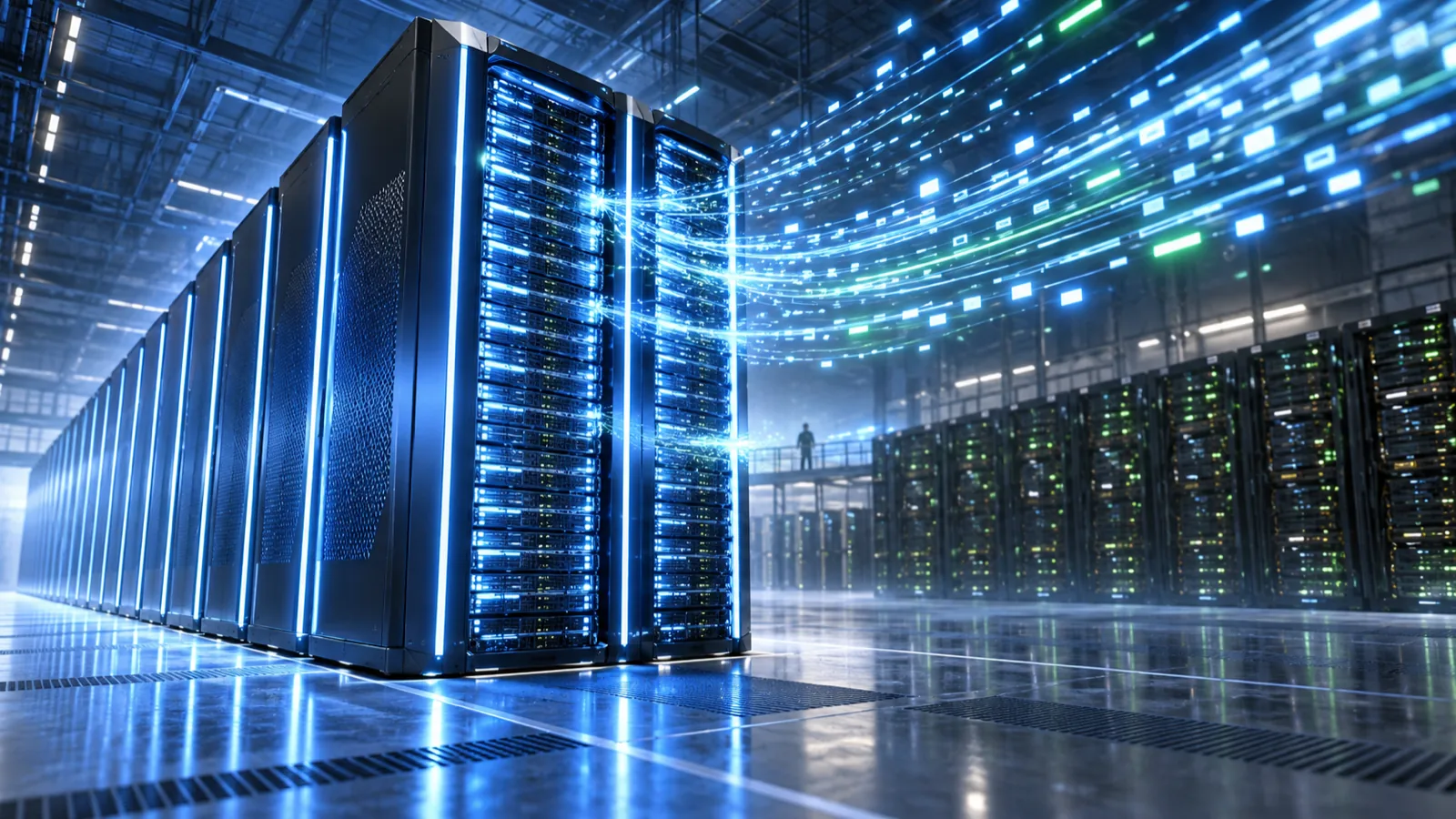
Microsoft says its Maia 300 accelerator can produce up to seven times the rack-level token throughput of Maia 200 and as much as 2.5 times the performance per watt. Those are potentially major gains—but they do not yet prove that Microsoft can replace Nvidia across Azure.
The comparisons are against Microsoft’s previous Maia generation, under workloads and configurations selected by Microsoft. Independent benchmarks, broad customer results, and pricing are not yet available. The production rollout is expected in 2027.
That combination—big numbers, narrow baseline, distant deployment—is the frame for everything that follows. A generational multiplier measured against your own prior silicon is a statement about trajectory, not about competitive position. It tells you which direction Microsoft is pushing its internal roadmap. It does not tell you where that roadmap lands relative to the accelerators Azure’s customers already rent.
What Maia 300 is designed to do
Maia 300 is built for inference rather than being marketed as a universal training chip. Microsoft highlights long-context requests, reasoning models, and multi-step agents—workloads that move large amounts of model state and repeatedly generate tokens.
Each accelerator includes 288GB of HBM4 memory with 18TB/s of bandwidth. A rack combines 96 accelerators. Those specifications target a central constraint in modern inference: moving weights and context through memory fast enough to keep expensive compute units busy.
The design choices read as a response to a specific bottleneck. In inference, especially at long context, the arithmetic units spend much of their time waiting on data. Weights must be streamed, key-value caches must be read and written as the context grows, and every additional token requires another pass through memory. Capacity determines how much context and how many concurrent sessions a single device can hold; bandwidth determines how quickly that state can be cycled. Stacking 96 of these into a rack is an argument about scale-out as much as scale-up—memory and bandwidth aggregated at the rack level are what make the throughput claim possible in the first place.
For agents, peak arithmetic performance is only one piece of the cost. A useful system must serve many concurrent sessions, preserve long contexts, call tools, and maintain predictable latency. That is why Microsoft emphasizes rack-level token throughput and performance per watt rather than only FLOPS.
Consider what an agent actually does between the user’s question and the final answer. It plans, drafts intermediate reasoning, invokes tools, reads their results, checks its own output, and sometimes retries. Each of those steps is a generation event, and each one consumes memory bandwidth and power. A chip tuned purely for peak FLOPS can look excellent on a matrix-multiplication benchmark while sitting idle waiting for the next token’s data. The metrics Microsoft chose—tokens per rack, tokens per watt—are the ones that map onto that step-by-step cost structure. They are also the metrics a buyer would care about if the buyer were paying for electricity and rack space rather than for a spec sheet.
What “seven times” actually means
The phrase is narrower than it first appears. Microsoft is comparing Maia 300 with Maia 200, not claiming seven times the performance of Nvidia’s latest systems. A generational gain can come from the chip, memory, networking, software, batching, precision choices, or a combination of all five.
That list matters because the sources are not interchangeable. A denser memory stack, a wider interconnect, a smarter scheduler that packs more concurrent requests onto the same silicon, or a lower-precision numerical format can each move a throughput number substantially without any single component being revolutionary. When several of these improve at once—as they typically do across a generational redesign—the combined multiplier can be large even if no individual advance is dramatic. The seven-times figure is therefore best read as a system-level result, and system-level results are exactly the ones most sensitive to how the system was configured for the test.
Without test prompts, model sizes, latency targets, precision, utilization, and power measurements, a single throughput multiplier cannot tell customers what their own workloads will cost.
A concrete example of why: throughput measured at loose latency targets can be far higher than throughput measured at the tight targets a chat product needs. A batch of short prompts exercises the system differently than a long-context reasoning trace. A benchmark run at high utilization says little about a production fleet that must absorb traffic spikes and idle capacity. And performance per watt depends on where the power is measured—at the accelerator, at the rack, or at the facility—and on whether cooling overhead is included. None of these details are dishonest to omit; they are simply the difference between a headline and a purchasing decision.
The claim should therefore be treated as a vendor roadmap signal, not an independently verified purchasing benchmark.
That is not a criticism so much as a category correction. Roadmap signals are useful: they tell customers and investors where a platform is heading and give software teams a target to optimize against. But they are not substitutes for the third-party testing that turns a vendor’s internal result into a number a customer can plan a budget around.
Is this an Nvidia replacement?
Not in the general sense. Nvidia’s advantage includes mature software, training and inference support, networking, developer tools, and availability across many clouds and data centers. Maia is optimized for Microsoft’s own infrastructure and services.
The software point deserves emphasis because it is the hardest to replicate. Accelerators are only as useful as the toolchains, kernels, compilers, and libraries that sit on top of them. Nvidia’s ecosystem has been refined across a decade of production deployments and a wide community of developers who expect their code to run with minimal modification. A new accelerator can match raw specifications and still lose on time-to-working-model if porting an existing workload requires engineering effort the customer did not budget for.
That narrower scope can still be powerful. Microsoft controls Azure’s data centers, model-serving software, Copilot products, and a large base of enterprise workloads. A vertically integrated chip does not need to win every benchmark if it lowers the cost of the specific services Microsoft operates at enormous scale.
Vertical integration changes the calculus. When the same organization owns the silicon, the serving stack, the data centers, and the products that consume the output, it can tune each layer against the others—and it captures the savings internally rather than passing them through as a rental margin. A chip that is merely good, deployed across a workload Microsoft already runs at scale, can be more valuable to Microsoft than an excellent chip it has to buy at market prices.
Maia can also improve Microsoft’s negotiating leverage and reduce exposure to shortages. The likely outcome is a heterogeneous Azure fleet, where Nvidia, AMD, Maia, and other accelerators serve different jobs.
Heterogeneity is the realistic end state, and it is worth being precise about why. Different workloads have different bottlenecks: training large models rewards interconnect and memory capacity, latency-sensitive serving rewards predictable scheduling, and batch inference rewards throughput per watt. A fleet that mixes accelerator types can route each job to the hardware that serves it best, and it can absorb supply shocks by shifting work between pools. The existence of Maia does not require the disappearance of Nvidia; it requires only that some meaningful share of Microsoft’s inference load runs more cheaply on Maia than on anything else Microsoft could buy.
Why tokens per watt is becoming the real battlefield
Agent workloads can run for minutes or hours and generate many intermediate tokens. Their cost compounds with every planning step, retry, tool result, and verification pass. At data-center scale, electricity, cooling, memory bandwidth, and networking can matter more than a chip’s headline peak.
The compounding is the key mechanic. A single query answered in one pass has a bounded cost. An agent that loops—plan, act, observe, revise—multiplies that cost by the number of iterations, and the number of iterations is often not known in advance. Every retry and every tool round-trip is another batch of tokens generated, another slice of memory bandwidth consumed, another increment on the power meter. Workloads like these turn efficiency metrics from a nice-to-have into the dominant term in the economics.
This changes product economics. If Maia 300 materially improves usable tokens per watt while meeting latency and reliability targets, Microsoft can support more agent sessions within the same power envelope. That is strategically valuable even if the chip never becomes a retail alternative to Nvidia.
The qualifier “usable” is doing real work in that sentence. Tokens per watt measured in a lab at relaxed latency is not the same as tokens per watt delivered to a paying customer who expects a response in seconds. The gain only converts into capacity—and therefore into margin or into lower prices—if it survives the latency and reliability constraints of production. That is precisely the gap the missing independent data would fill.
For readers, the practical implication is a shift in what to watch. Headline FLOPS numbers have never been a good proxy for serving cost, and they are becoming a worse one as agentic workloads spread. The figures that will matter are tokens per watt at realistic latency, memory capacity per device, and the price of a rack-hour—not the peak of a single chip.
Verdict
Maia 300 is credible evidence that Microsoft wants tighter control over the economics of AI inference. Its memory capacity, bandwidth, and rack design are aligned with long-context and agent workloads.
The seven-times claim is not fake, but it is incomplete. Until independent tests reveal workload details, latency, pricing, and real power consumption, Maia 300 should be viewed as a promising internal Azure accelerator—not proof that Nvidia has already been displaced.
What would change that assessment is specific and checkable: third-party benchmarks run on disclosed configurations, published latency and power figures at the rack level, pricing that lets customers compare cost per token against existing Azure options, and evidence from real customer deployments once the 2027 rollout begins. Until then, the sensible reading is that Microsoft has built a credible instrument for lowering its own inference costs—and that the competitive story will be settled by measurements, not multipliers.
Sources
> Want more like this?
Get the best AI insights delivered weekly.
By subscribing, you agree to our Privacy Policy. You can unsubscribe at any time.
> Related Articles
Control Room Can Halt Research Output in 35 Seconds—What Keeps Running?
OpenAI's Control Room puts research inference behind a central stop system. For builders, the hard question is what a stopped workload can keep doing.
OpenAI's Control Room Can Cut Off Research—What Does It Leave Running?
OpenAI's Control Room puts research inference behind a central permission check. For builders, the revealing detail is what a stop command leaves running.
Fable 5.2 and Mythos 5.2 Share a Core—So What Are You Choosing?
Anthropic's Fable 5.2 and Mythos 5.2 share an underlying system but different safeguards. For builders, the first decision is access, then the acceptance test.
Most Read
- 1 Kimi K3.1 Pro: China's Open-Weight Model Just Caught the Frontier
- 2 OpenAI Is Buying the Bottleneck: Can Orchestra Bio Cut a 15-Year Drug Timeline?
- 3 1,068 Tokens Per Second: Can Mercury 3 Change How LLMs Generate Text?
- 4 Same Price, Better Coding: How Good Is DeepSeek V4.1 Flash 1017?
- 5 Used OpenCode? Should You Rotate Your API Key After the Console Breach?





Latest News
- Decisions API Scores 1,000 Questions—Can Its Confidence Travel?
- Edge0-145B Promises Frontier AI on Your PC—Which PC?
- Hydrogen Starts at $1.50—What Will a Finished Task Really Cost?
- $0.10 per Million Tokens: Decisions API Has a Different Catch
- Control Room Can Halt Research Output in 35 Seconds—What Keeps Running?
- Huawei Released MACaQ—Will Its Quantizer Fit Your Local Stack?
Tags
> Stay in the loop
Weekly AI tools & insights.