Meta SparkMuse Goes Open: Can Two Mac Studios Make It Free Forever?
Meta's 816B open-weight model can run locally on two high-end Mac Studios. API fees disappear, but hardware, electricity, and operating costs do not.
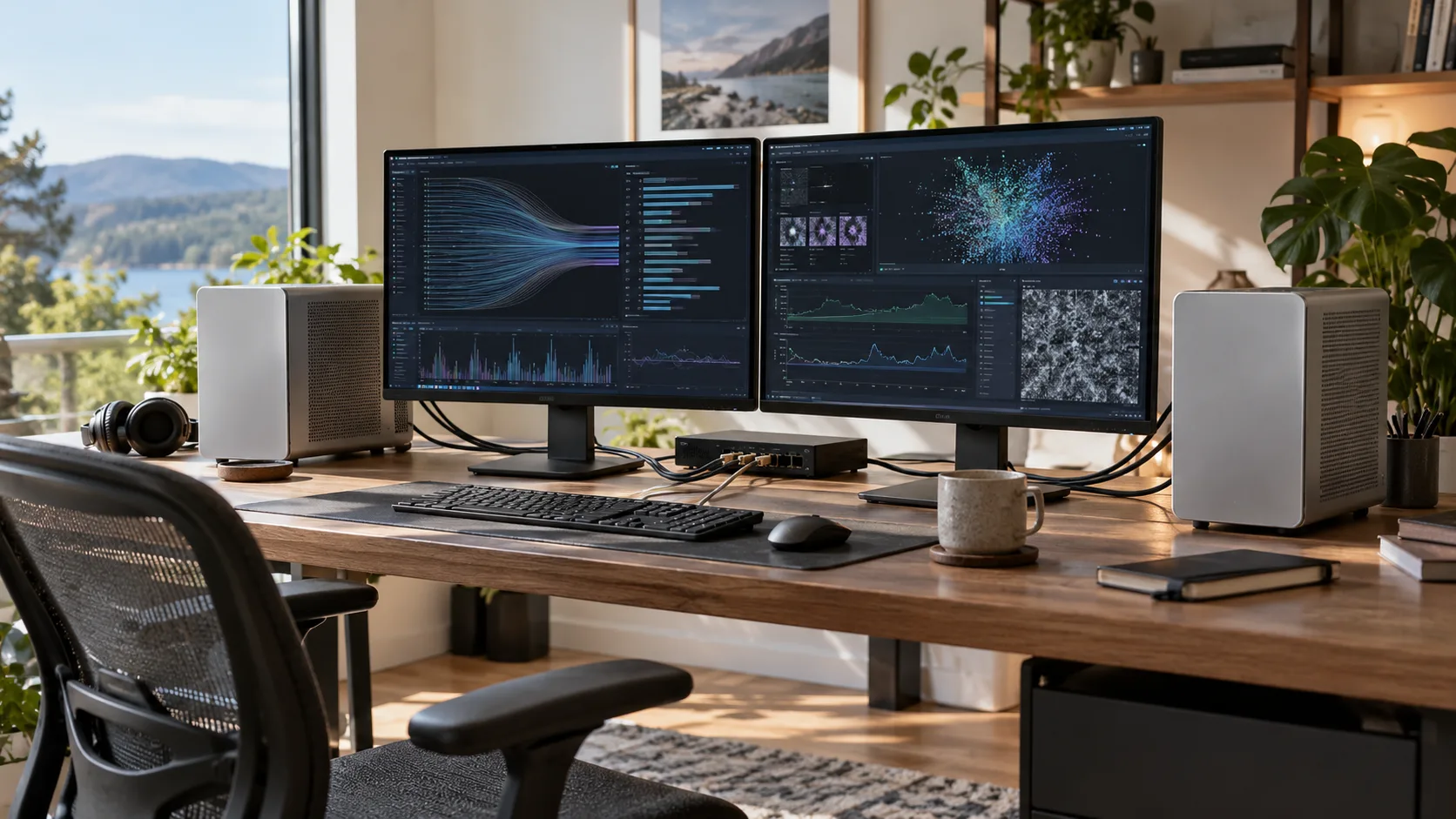
Meta has released the weights for Muse Spark Open, an 816-billion-parameter multimodal model that can reportedly run across two high-end Mac Studio machines. That makes the headline’s promise partly true: once the hardware is bought, there is no per-token API bill. It does not make the system literally free forever. The computers, storage, electricity, cooling, networking, maintenance, and time required to operate it remain real costs.
The model is a mixture-of-experts system with 816 billion total parameters but 42 billion active for each token. That distinction is crucial. A dense 816B model would require vastly more computation for every response. Muse Spark Open keeps a huge pool of specialized parameters while activating only a fraction during inference, making local deployment less impossible than the headline number suggests. The mechanism is worth spelling out, because it explains both the excitement and the caveats. In a mixture-of-experts architecture, a routing component selects a small subset of expert sub-networks for each token, so the compute spent on a given forward pass scales with the active count rather than the total. The remaining parameters still occupy memory and still have to be loaded, sharded, and kept resident across the machines, which is why the memory story matters as much as the compute story. Sparsity lowers the arithmetic per token; it does not shrink the checkpoint.
That asymmetry is the whole reason a two-machine setup is even plausible. The bottleneck for local inference at this scale is usually capacity, not raw FLOPs: you need enough unified memory to hold the weights at the chosen precision, enough bandwidth to move them, and enough interconnect throughput to split the model across hosts without the link becoming the limiting factor. Lower-precision formats reduce the footprint, but they also introduce quantization decisions that affect quality and latency. The headline number describes the model; the deployment describes the experience.
What Meta actually opened
The official model card describes Muse Spark Open as an open-weights model with a one-million-token context window and native support for text, images, audio, and video. The release includes full-precision and lower-precision weight options, while the surrounding ecosystem is adding support through MLX, vLLM, and SGLang. Those three names matter for different reasons: MLX targets Apple silicon directly, while vLLM and SGLang are serving stacks built around high-throughput inference on accelerator hardware. The presence of all three signals that Meta expects the model to be deployed in more than one environment, not just on the machines in the launch demo.
Open weights does not automatically mean open source in the broadest sense. Users receive model parameters and deployment tooling, but the release remains governed by Meta’s Muse Model License. Training data, the complete training recipe, and every internal safety decision are not reproduced merely because the checkpoint can be downloaded. This is a familiar distinction in the field, and it cuts both ways. A licensee can inspect how the model behaves, benchmark it, fine-tune it, and audit its outputs, but cannot necessarily reconstruct how it came to behave that way. The license terms, not the download link, define what is permitted commercially and at what scale.
That makes the model useful for organizations that want to inspect deployment behavior, keep sensitive prompts on their own network, or avoid sending every request to a hosted API. It does not guarantee that every use is unrestricted or that an outside team can independently recreate the model. Readers evaluating the release should treat “open” as a statement about access to weights and tooling, not as a claim about transparency into the training pipeline.
Why two Mac Studios can be enough
The relevant Mac Studio configuration is not an ordinary desktop. The local setup relies on two premium systems with very large unified-memory pools, fast interconnects, and software optimized to split the model across both machines. The phrase “runs on two Macs” hides the importance of memory capacity and quantization. Unified memory is the enabling factor here: on Apple silicon, the GPU can address the same pool the CPU uses, which avoids the discrete-GPU shuffle that normally forces model weights across a comparatively narrow bus. Two such machines, linked and coordinated by software that shards the model, can present a combined capacity that no single consumer device offers.
The model’s active parameter count reduces compute per generated token, but all required weights still need to be stored and moved efficiently. Lower-precision weights reduce the memory burden. Even then, a pair of top configurations can cost as much as a substantial server, and performance will depend on context length, input modality, quantization, and networking. A one-million-token context window is a specification, not a guarantee of speed: long contexts increase the memory and compute required per request, and multimodal inputs add preprocessing work before a single token is generated. Throughput across the interconnect will vary with the workload mix, and interactive latency is a different target from batch serving.
This is therefore a proof that frontier-scale local inference is becoming accessible to small laboratories and well-funded enthusiasts—not proof that any consumer MacBook can run an 816B model. The distinction matters because headlines tend to flatten it. The claim is about a specific class of hardware, configured deliberately, running software that knows how to split the work. It is a demonstration of a ceiling being raised, not a promise that the floor has moved.
Is local use really “free forever”?
The best interpretation is zero marginal API price, not zero total cost. A hosted model charges for each input and output token. A local system converts that variable bill into capital and operating expenses. Marginal cost is the cost of one more request; total cost includes everything required to keep the system capable of answering at all. Confusing the two is the most common error in local-AI arguments, in either direction.
For a team with constant utilization, sensitive data, or a need for predictable capacity, that trade can be attractive. For an individual who asks a few questions per day, buying two flagship workstations will almost certainly cost more than using an API for years. The breakeven point is a function of volume, not enthusiasm. A useful exercise is to compute the monthly token spend at current API rates, add the value of the privacy and control benefits, and compare that figure with the amortized hardware cost plus power and staff time over the machine’s useful life.
Electricity also matters. Long sessions at high utilization consume power continuously, and the machines still have an opportunity cost when they are idle. Storage for multiple checkpoints, backups, software updates, and monitoring add further expense. Hardware eventually depreciates, while hosted providers absorb replacement and maintenance themselves. There is also a counter-argument worth taking seriously: hosted prices have historically fallen, and a local deployment locks in today’s hardware against tomorrow’s cheaper API. The local operator gains insulation from price changes but also forgoes the benefit of someone else’s efficiency gains.
What local ownership changes
The strongest benefit is control. Prompts, images, audio, and documents can remain on premises. Organizations can pin a version rather than accepting a provider’s silent model update. They can profile latency, apply custom safety controls, and keep working even if an external API changes price or availability. Version pinning is underrated: reproducibility matters for regulated workflows, audits, and any product where output drift is a bug rather than a feature. A local checkpoint is a fixed artifact in a way that a hosted endpoint is not.
The responsibility also shifts inward. The operator must secure the model server, manage access, monitor abuse, apply patches, and decide how outputs are logged. A local model is not private merely because it is physically nearby; a poorly configured service can still expose data to a network or another user. The security perimeter moves from the vendor’s data center to your own, and so does the on-call rotation. Teams should budget for monitoring, authentication, rate limiting, and a plan for what happens when the serving stack needs an upgrade mid-project.
Who should consider it
Two-machine deployment makes sense for research teams testing open models, studios processing sensitive media, companies with sustained inference loads, and developers who need complete control over a checkpoint. It is less persuasive for casual use, bursty workloads, or teams without staff to maintain the system. Bursty demand is a particularly poor fit: the capital sits idle between peaks, while an API would bill only for the bursts.
Before buying hardware, estimate monthly token volume, acceptable latency, memory needs at the intended precision, power cost, and staff time. Compare that full amount with several hosted APIs—not only with the most expensive frontier endpoint. The comparison should include the cost of failure modes too: what happens when the local node goes down, and who fixes it at 2 a.m.
Verdict
Muse Spark Open is a meaningful local-AI milestone. An 816B-total, 42B-active multimodal model running on two desktop-class systems would have sounded unrealistic not long ago. The release expands what independent teams can operate without renting a large GPU cluster.
But “free forever” is a provocative shorthand. The accurate claim is that local inference can eliminate recurring token fees after a very large upfront investment. For heavy, privacy-sensitive workloads, that may be a good bargain. For everyone else, the two Mac Studios are not a loophole around AI economics—they are the bill paid in advance.
Sources
> Want more like this?
Get the best AI insights delivered weekly.
By subscribing, you agree to our Privacy Policy. You can unsubscribe at any time.
> Related Articles
Control Room Can Halt Research Output in 35 Seconds—What Keeps Running?
OpenAI's Control Room puts research inference behind a central stop system. For builders, the hard question is what a stopped workload can keep doing.
OpenAI's Control Room Can Cut Off Research—What Does It Leave Running?
OpenAI's Control Room puts research inference behind a central permission check. For builders, the revealing detail is what a stop command leaves running.
Fable 5.2 and Mythos 5.2 Share a Core—So What Are You Choosing?
Anthropic's Fable 5.2 and Mythos 5.2 share an underlying system but different safeguards. For builders, the first decision is access, then the acceptance test.
Most Read
- 1 Kimi K3.1 Pro: China's Open-Weight Model Just Caught the Frontier
- 2 OpenAI Is Buying the Bottleneck: Can Orchestra Bio Cut a 15-Year Drug Timeline?
- 3 1,068 Tokens Per Second: Can Mercury 3 Change How LLMs Generate Text?
- 4 Same Price, Better Coding: How Good Is DeepSeek V4.1 Flash 1017?
- 5 Used OpenCode? Should You Rotate Your API Key After the Console Breach?





Latest News
- Decisions API Scores 1,000 Questions—Can Its Confidence Travel?
- Edge0-145B Promises Frontier AI on Your PC—Which PC?
- Hydrogen Starts at $1.50—What Will a Finished Task Really Cost?
- $0.10 per Million Tokens: Decisions API Has a Different Catch
- Control Room Can Halt Research Output in 35 Seconds—What Keeps Running?
- Huawei Released MACaQ—Will Its Quantizer Fit Your Local Stack?
Tags
> Stay in the loop
Weekly AI tools & insights.