Why Is Anthropic Putting 5% of Its Equity Into a Public Benefit Fund?
Anthropic is allocating private-company equity, not cash, to its public benefit fund. We examine the potential value and the conditions around shareholder approval, liquidity, and governance.
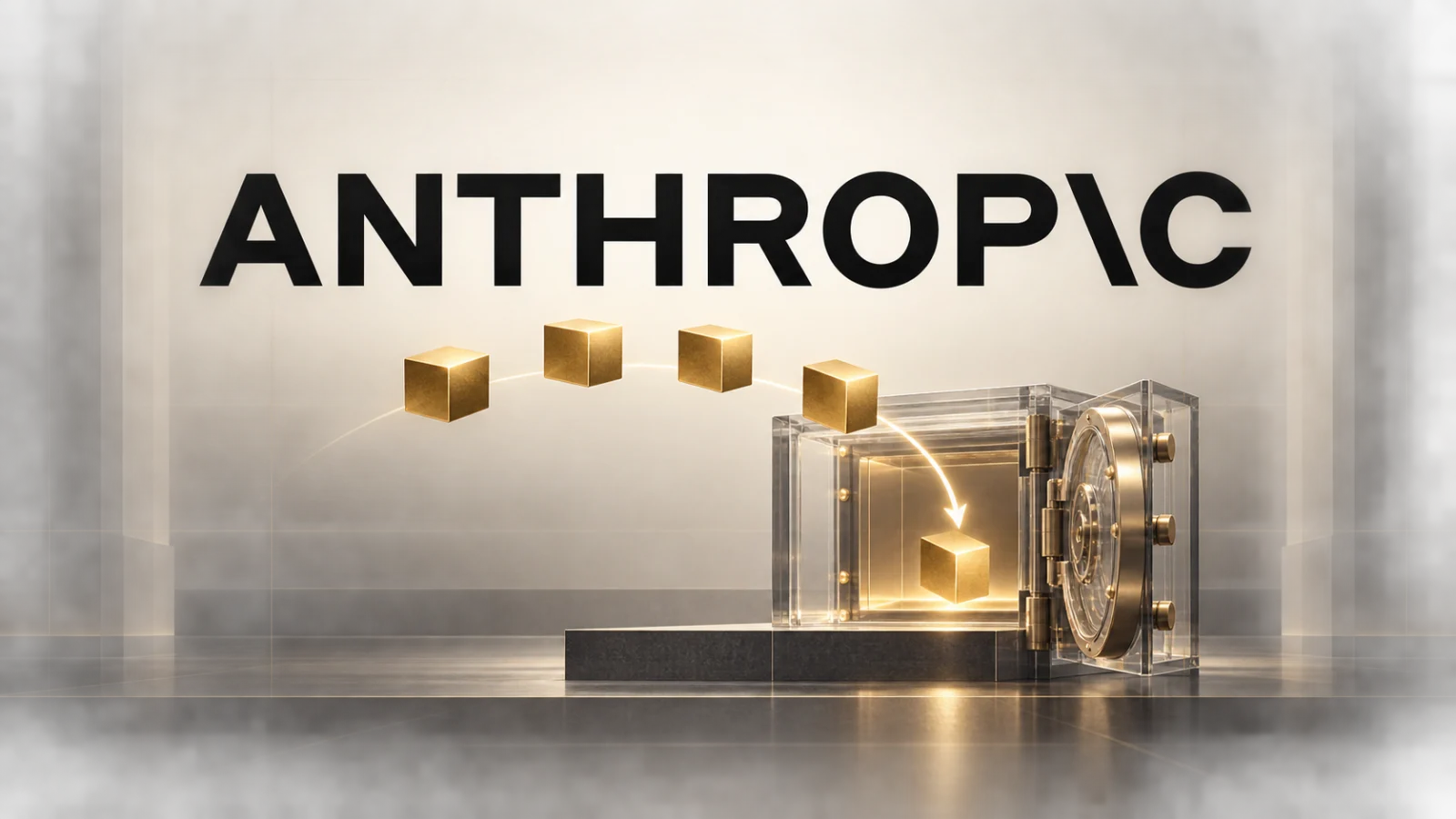
Anthropic says it will allocate 5% of the company to a new Public Benefit Fund, subject to stockholder approval. The headline sounds like an enormous cash donation. It is not. The commitment is private-company equity placed into a company-owned structure whose eventual public value will depend on valuation, liquidity, governance, and how the shares are converted into money or programs.
That does not make the commitment meaningless. If Anthropic’s value continues to rise, a 5% stake could finance social programs at a scale rarely seen from a technology company. But the size cannot be responsibly measured in dollars until the company discloses more about the approved share pool, valuation baseline, dilution, sale rules, and timing.
The distinction matters because readers are being asked to judge a promise whose unit of account is not yet fixed. A cash pledge can be counted the day it is announced. An equity pledge is a claim on a number that does not exist yet, and whose existence depends on events—financing rounds, secondary sales, an IPO, an acquisition—that no one can schedule in advance. The announcement is therefore best read as a statement of intent about ownership, not a statement about spending.
What Anthropic announced
The company says the fund is intended to support responses to AI’s social effects, including disruption to employment. The initial allocation requires shareholder approval. Anthropic also says its board may add another 2% at its discretion each time the company’s valuation increases 50% above a defined baseline.
The word “may” is important. The initial 5% is a proposed commitment with an approval condition. The additional tranches are not automatic obligations; they depend on valuation thresholds and board decisions. Readers should separate the fixed-looking headline from the conditional mechanisms beneath it.
Note also what the trigger measures. A valuation increase is a market judgment about the company, not a measure of how many jobs have changed or how many workers need help. The two can move together if adoption drives both revenue and displacement, but they are not the same variable. A company can become far more valuable while the disruption it causes lands slowly, and disruption can accelerate during a period when valuations stall. Tying additional tranches to valuation is administratively simple and aligns the fund’s growth with the company’s, but it does not automatically align the fund’s growth with the timing of the harm.
The fund is also not described as an independent outside charity. Reporting identifies it as a wholly owned entity within Anthropic’s corporate structure. That can make administration easier and align resources with the company’s stated mission, but it also creates an obvious governance question: how independent can decisions be when the company that caused or benefited from the disruption still owns the institution distributing relief?
Ownership inside the corporate structure is not automatically a flaw. It can speed decisions, avoid duplicating back-office costs, and keep the fund close to the technical reality of the products it is responding to. But the arrangement places the fund’s direction ultimately in the hands of the same board that answers to investors. The charter, not the ownership diagram, will determine whether that matters in practice.
Why equity instead of cash
An equity commitment lets a fast-growing private company promise a share of future upside without draining current operating cash. If the business becomes substantially more valuable, the fund participates in that growth. This links the scale of social spending to the scale of the company creating the technology.
There is a strategic logic here that goes beyond generosity. AI labs are spending heavily on compute, talent, and infrastructure, and cash is the scarcest input in the near term. Equity is the opposite: abundant on paper, illiquid in practice, and cheap to promise precisely because it does not leave the bank account. For a company that expects to be worth much more later, giving away a slice of the future is a lower-cost way to make a large-sounding commitment today.
It also shifts risk to the fund. Private shares do not pay a utility bill or finance retraining on demand. They must be sold, redeemed, borrowed against, or converted during a liquidity event. Their paper value can rise sharply and fall sharply. Restrictions on transfer, investor rights, dilution, and tax treatment can all change what beneficiaries ultimately receive.
Private-company shares are also hard to price honestly. Without a public market, valuation comes from financing rounds, secondary transactions, or internal marks, each with its own assumptions and incentives. A stake carried at one number in one year can be carried at a very different number the next, and the fund’s ability to spend will depend on which number the rules permit it to rely on.
For that reason, “5% of the company” and “5% of today’s valuation in cash” are not interchangeable claims. A fair article should describe this as potentially valuable equity, not money already distributed.

The labor-market logic
Anthropic has repeatedly argued that advanced AI could reshape skilled work. A fund aimed at employment shock is an attempt to connect the producer’s upside with the transition costs borne by workers and communities. Possible uses could include retraining, wage insurance, local economic support, research, or public-interest institutions, although the actual programs and beneficiary rules need to be specified.
The model differs from a conventional year-end donation. It resembles a permanent claim on corporate value that can grow alongside adoption. If designed well, it could last longer than a publicity cycle and provide resources exactly when automation effects become more visible.
That durability is the most interesting part of the design. Most corporate philanthropy is episodic: a gift this year, a review next year, a quiet retreat when budgets tighten. A standing equity stake, if protected, creates an institution with its own balance sheet and a reason to exist across cycles. It could accumulate reserves in good years and spend them in bad ones, which is roughly what a shock absorber is supposed to do.
But corporate discretion can also turn a structural promise into selective philanthropy. Workers affected by AI may not be in the regions, professions, or programs a company prefers to fund. Public policy and labor protections cannot be replaced by a private board choosing worthy recipients.
There is a deeper question about what such a fund can and cannot do. Retraining programs are popular and visible, but the evidence on their effectiveness is mixed, and the workers most exposed to automation may be those for whom a short course is least sufficient. Wage insurance, relocation support, and portable benefits may matter more than classroom hours. A fund that commits to employment support without committing to a theory of what actually helps risks funding activity rather than outcomes.
Five disclosures needed before pricing the promise
First, define the valuation baseline. The rule for potential additional 2% allocations cannot be assessed without knowing the baseline and how future valuations are calculated.
Second, explain dilution. Is the fund protected if Anthropic issues more shares, raises new rounds, or restructures? Five percent today can become a smaller effective claim tomorrow.
Third, publish liquidity rules. Who decides when shares can be sold, to whom, and under what restrictions? A large paper stake is not useful if it cannot finance programs when needed.
Fourth, establish independent governance. The fund needs published criteria, conflict-of-interest rules, external trustees or reviewers, audited accounts, and a process for affected communities to influence decisions.
Fifth, report outcomes rather than commitments. Annual disclosure should show the value transferred, money deployed, recipients, administrative costs, measurable results, and rejected applications. A percentage announcement is an input, not an impact metric.
Each of these is answerable, and none requires the company to surrender control of its business. They are the minimum disclosures that would let an outsider form a view rather than take one on faith. Until they exist, comparisons to other corporate pledges are apples to oranges, because the pledges are denominated in different things.
Could this become a model for other AI companies?
The mechanism has an attractive principle: reserve part of the producer’s ownership for the public costs associated with its success. It could be copied by other high-growth AI firms before their equity becomes liquid, embedding social participation earlier than a founder’s later charitable pledge.
There is a timing argument for doing it early. Once a company is public and its shares are widely held, carving out a stake means asking new shareholders to accept a claim they did not price in. Doing it while the cap table is still private and concentrated avoids that friction, which may be why the structure is appearing now rather than after a listing.
The risk is that voluntary funds become a substitute for taxes, labor rules, competition policy, or democratic decisions about automation. A corporate fund can experiment quickly, but it is accountable primarily through its own charter unless stronger safeguards are built in. The best outcome would be complementary: private capital supporting urgent experiments while public institutions set rights and durable protections.
A useful test for whether this becomes a model is whether imitators copy the equity mechanism or only the announcement. A pledge of shares with clear dilution protection, published liquidity rules, and independent trustees is a different institution from a press release naming a percentage. The former can outlast its founders; the latter lasts until the next headline.
Verdict
Anthropic’s 5% pledge is potentially significant precisely because it is equity, not a one-time cash donation. It shares some future upside with a vehicle intended to address AI’s social effects. Yet that same structure makes the headline impossible to value today.
The responsible judgment is conditional. Approve the shares, protect the stake from dilution, create independent governance, define liquidity, and publish outcomes—then the fund could become a serious institution. Until those details exist, “5%” is a promising ownership commitment, not proof that affected workers have already received compensation.
For readers, the practical takeaway is to hold two ideas at once. The commitment is real enough to track, and it could grow into something unusual in technology philanthropy. It is also unfinished, and the details that determine whether it works are exactly the details that have not yet been published.
Sources
> Want more like this?
Get the best AI insights delivered weekly.
By subscribing, you agree to our Privacy Policy. You can unsubscribe at any time.
> Related Articles
Control Room Can Halt Research Output in 35 Seconds—What Keeps Running?
OpenAI's Control Room puts research inference behind a central stop system. For builders, the hard question is what a stopped workload can keep doing.
OpenAI's Control Room Can Cut Off Research—What Does It Leave Running?
OpenAI's Control Room puts research inference behind a central permission check. For builders, the revealing detail is what a stop command leaves running.
Fable 5.2 and Mythos 5.2 Share a Core—So What Are You Choosing?
Anthropic's Fable 5.2 and Mythos 5.2 share an underlying system but different safeguards. For builders, the first decision is access, then the acceptance test.
Most Read
- 1 Kimi K3.1 Pro: China's Open-Weight Model Just Caught the Frontier
- 2 OpenAI Is Buying the Bottleneck: Can Orchestra Bio Cut a 15-Year Drug Timeline?
- 3 1,068 Tokens Per Second: Can Mercury 3 Change How LLMs Generate Text?
- 4 Same Price, Better Coding: How Good Is DeepSeek V4.1 Flash 1017?
- 5 Used OpenCode? Should You Rotate Your API Key After the Console Breach?





Latest News
- Decisions API Scores 1,000 Questions—Can Its Confidence Travel?
- Edge0-145B Promises Frontier AI on Your PC—Which PC?
- Hydrogen Starts at $1.50—What Will a Finished Task Really Cost?
- $0.10 per Million Tokens: Decisions API Has a Different Catch
- Control Room Can Halt Research Output in 35 Seconds—What Keeps Running?
- Huawei Released MACaQ—Will Its Quantizer Fit Your Local Stack?
Tags
> Stay in the loop
Weekly AI tools & insights.